Montessori Philosophy
Understanding the child-centered educational approach that guides our teaching
The Montessori Philosophy
The Montessori philosophy is an educational approach developed by Dr. Maria Montessori, emphasizing child-centered learning. It is based on the belief that children learn best through self-directed activities and hands-on experiences.
The Montessori Method encourages independence, curiosity, and a love for learning by providing a prepared environment where children can explore and discover at their own pace. Teachers act as guides, facilitating learning rather than directing it.
This approach nurtures each child's unique potential, fostering cognitive, social, and emotional development, and helping them become confident, capable, and lifelong learners.
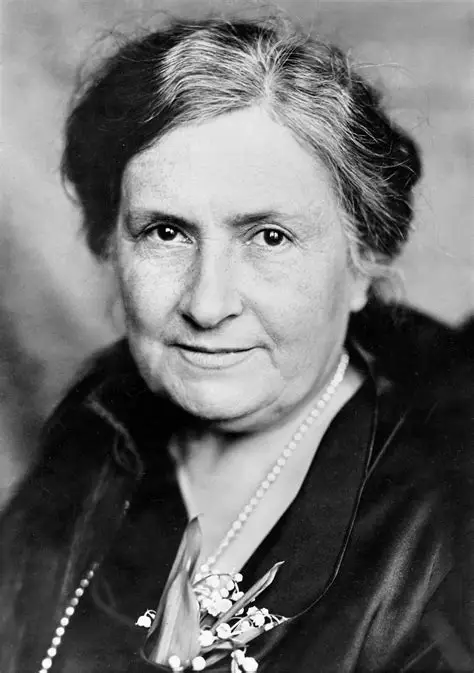
Dr. Maria Montessori
Founder of Montessori Education
Our Implementation
Our belief is that all children want to learn and can absorb knowledge with cohesion; given the right kind of activities at the right time of their development.
Our teachers are professionals who are trained to observe carefully and respond to the individual needs of the pupils.
Our pupils are treated with respect and care in a gentle and sympathetic environment to assist them to achieve optimum efficiency in life.
Montessori Learning Strategies
Practical Life
Real-Life Activities
Children engage in everyday tasks like pouring, sweeping, and dressing, which develop fine motor skills and independence.
Grace and Courtesy Lessons
Teach social skills and manners, helping children understand and practice respectful behavior.
Care of Environment
Involves activities like plant care and cleaning, instilling responsibility and a sense of order.
Sensorial
Sensory Materials
Use of specifically designed materials to refine the five senses, such as the Pink Tower, Colour Tablets, and Sound Cylinders.
Isolation of Qualities
Each material isolates one quality (e.g., colour, size, texture) to help children focus and compare.
Gradual Complexity
Materials are presented in increasing complexity to match the child's development and understanding.
Mathematics
Concrete to Abstract
Start with tangible materials like Number Rods and Golden Beads to introduce mathematical concepts, gradually moving to abstract thinking.
Sequential Learning
Concepts are introduced in a logical, sequential manner, building on what the child has already mastered.
Hands-On Manipulation
Encourage children to physically manipulate materials to understand mathematical concepts deeply.
Language
Phonetic Awareness
Use Sandpaper Letters and Moveable Alphabets to teach sounds and letter formation.
Reading and Writing Activities
Introduce reading through phonetic word cards and writing through tracing and composing words.
Enrichment of Vocabulary
Utilize classified cards and nomenclature to expand vocabulary and comprehension.
Cultural Studies
Geography and Science Materials
Use puzzle maps, globes, and science experiments to introduce children to different cultures, continents, and natural phenomena.
Art and Music Integration
Incorporate diverse artistic and musical activities to expose children to various cultural expressions.
History and Biology Lessons
Provide timelines, biographical stories, and hands-on activities to explore history and the living world.
Experience the Montessori Difference
See how our child-centered approach can benefit your child's development
Learn About Our Montessori Approach
Have questions about our teaching philosophy? We'd love to discuss them with you!